
Long-Distance Tips
How to Build a Long-Distance Communication Schedule That Works
Inside CloserTo
Not every connection point needs to be a call. Daily photos, journals, letters, and countdowns can share the load.
A long-distance communication schedule sounds unromantic until you have gone three days with mismatched expectations. One person thought you were both busy. The other thought something was wrong. Nobody meant to hurt anyone, but the silence got interpreted before it got explained.
The point of a communication schedule is not to make your relationship feel like a calendar invite. It is to remove the guesswork, so the connection can feel softer. When you both know when you will talk, you do not have to spend the day quietly auditioning every gap for meaning.
Start with needs, not numbers
The question “how often should we talk?” usually hides better questions: What makes each of us feel secure? What makes each of us feel crowded? What kind of contact counts as connection? What kind of silence feels okay?
- One partner might need a good-morning text to feel remembered.
- The other might need uninterrupted work hours to feel sane.
- One might feel loved through long calls.
- The other might feel more present sending voice notes throughout the day.
- Both might be exhausted by constant “what are you doing?” check-ins.
Name those needs before building the schedule. Otherwise you are just copying someone else’s rhythm and hoping it fits your nervous systems.
A simple weekly communication template
Use this as a starting point, then adjust. The goal is a rhythm that feels reliable without taking over both lives.
- Daily anchor: one short predictable touchpoint, like a morning text, goodnight voice note, or Daily Photo.
- Two or three real calls: not necessarily long, but protected. Put them on the calendar if your weeks are busy.
- One date-style call: something with an activity, not only catching up. Movie, game, dinner, questions, planning.
- One logistics check-in: visit planning, budgets, travel, calendars, anything practical that should not hijack every romantic call.
- One low-pressure day: a day where lighter contact is expected, so nobody panics when replies are slower.
This is not a law. It is a scaffold. Some couples need more. Some need less. What matters is that both of you can say, “I know when I will feel close to you again.”
Match the channel to the job
Not every feeling belongs in a text thread. Long distance gets easier when each channel has a purpose.
- Texts: quick updates, logistics, tiny affection, memes, “thinking of you.”
- Voice notes: warmth, reassurance, stories, goodnights, apologies that need tone.
- Video calls: presence, dates, hard conversations, shared activities.
- Shared journal: reflections, big feelings, trip memories, things you want to reread later.
- Daily photos: ordinary life, proof of day, low-effort closeness.
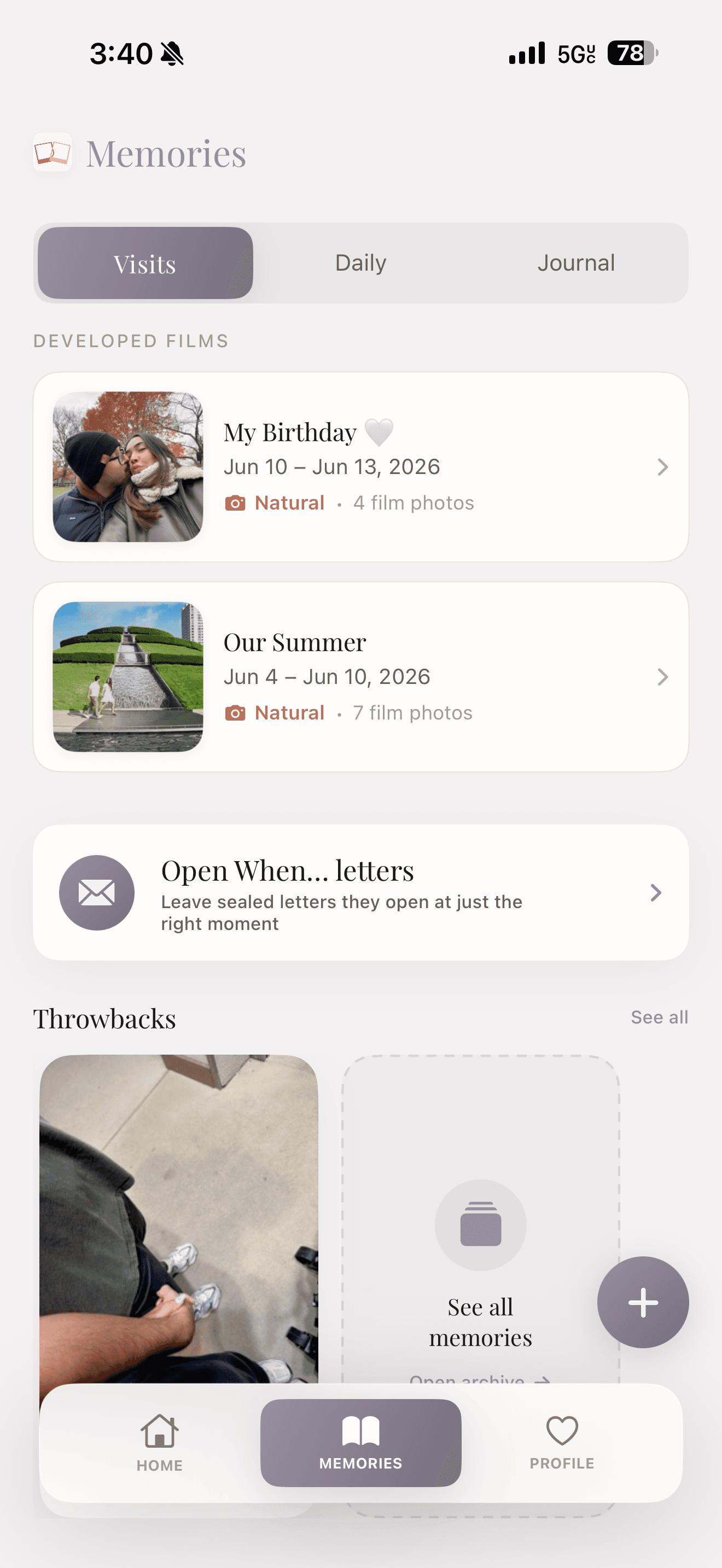
CloserTo is built around that mix: Daily Photo for the tiny daily window, Shared Journal for slower thoughts, Countdown for the next visit, and Visit Film for the days you finally get together. If you want the daily photo part, start with the best daily photo app for couples.
Time zone relationships need fairness, not perfection
If one of you is always calling at midnight and the other is always fresh after dinner, resentment will eventually sneak in. You may not be able to make time zones easy, but you can make them feel fair.
- Find overlap windows. Write down the realistic times you are both awake and not working.
- Rotate inconvenience. If late calls are unavoidable, alternate who takes the tired slot when possible.
- Use asynchronous closeness. Voice notes, letters, photos, and journal entries keep intimacy moving when live time is scarce.
- Protect sleep. A relationship that regularly destroys one partner’s rest is not sustainable.
What to do when the schedule breaks
It will break. Work runs late, family needs something, someone falls asleep, the call gets cut short, travel days get messy. The repair matters more than the miss.
- Assume good faith first, unless there is a pattern telling you not to.
- Send a quick repair: “I am sorry I missed our call. Can we do tomorrow at 8?”
- Reschedule with a concrete time, not a vague “later.”
- Talk about patterns when calm, not in the hottest part of the hurt.
- Update the rhythm if it no longer fits your life.
If communication problems are becoming the whole relationship, pair this guide with how to make a long-distance relationship work. The schedule helps, but it cannot replace trust, repair, and a shared plan.
A schedule should leave room for surprise
Structure is there to make the relationship feel held, not trapped. Keep the little unscheduled things: the random photo, the “this made me think of you,” the five-minute call from the parking lot, the voice note from bed. Predictable connection keeps you secure. Surprise keeps you tender.
The best communication schedule is not the one with the most contact. It is the one that helps both people stop guessing and start feeling chosen.
Frequently asked questions
- How often should long-distance couples talk?
- There is no universal number. Many couples like one reliable daily touchpoint plus a few longer calls each week, but the right rhythm depends on time zones, work, school, and emotional needs. Consistency matters more than constant contact.
- Is it bad not to talk every day in a long-distance relationship?
- Not automatically. Some couples thrive with daily calls; others feel better with lighter daily messages and longer planned calls. The key is that both partners understand the rhythm and do not interpret silence as rejection.
- How do you communicate across time zones?
- Create overlap windows, rotate inconvenience when possible, use asynchronous intimacy like voice notes and daily photos, and keep one shared place for plans so neither partner has to guess when the next call is happening.
Keep reading
Long-Distance Tips
Long-Distance Relationship Gifts That Actually Feel Personal
The best long-distance gifts are not expensive for the sake of it. They give your partner something to hold, open, watch, revisit, or look forward to.
Long-Distance Tips
Long-Distance Care Package Ideas for the Weeks They Need You
A good care package is not a box of random cute things. It is a small, physical way to say: I know the week you are having, and I am with you in it.
Long-Distance Tips
Open When Letters for Your Boyfriend: 35 Ideas That Do Not Feel Generic
A practical list of Open When letters for your boyfriend, written for real long-distance moments instead of generic card copy.